Does Continental serve Keller, Texas?
Continental reviews air duct, dryer vent, indoor-air, and HVAC requests for qualifying Keller addresses. Coverage is confirmed by ZIP code, property type, requested service, and current scheduling capacity.
 Skip to main content
 Get My Estimate
Keller Air Duct Cleaning decisions should begin with the property, the symptom, and the service being considered. Continental helps qualifying homeowners, property managers, and businesses compare air duct cleaning, dryer vent cleaning, indoor air quality, and HVAC-related pathways—then confirm coverage and scope by calling or texting (214) 886-0963.
Share a few details and Continental will help identify the right next conversation for your property.
Start with the condition, not a sales package. These short answers help homeowners and property teams decide what to document before requesting a property-specific scope.
Reviewed 2026-09-04Continental reviews air duct, dryer vent, indoor-air, and HVAC requests for qualifying Keller addresses. Coverage is confirmed by ZIP code, property type, requested service, and current scheduling capacity.
Larger homes and multi-system layouts make room, zone, and access details valuable. The address and building conditions—not the city name alone—determine the responsible scope.
Document visible material at accessible registers, recent remodeling, pest or water history, persistent HVAC-linked odors, and where the concern appears. Read when air duct cleaning may make sense before choosing a service.
Price depends on verified systems, components, access, layout, condition, protection needs, and approved optional work. Useful intake details include gates, long driveways, multiple systems, high ceilings, attic entries, pets, and occupied schedules.
larger homes and multi-system layouts make room, zone, and access details valuable. Local requests may involve larger homes, mature lots, newer communities, schools, medical offices, retail, and professional spaces. Continental begins by confirming the address, property type, service interest, observable condition, and authorization before discussing an appointment or price.
Air duct cleaning, residential and commercial duct work, dryer vent cleaning, indoor air quality guidance, and HVAC services solve different problems. Visible debris or renovation history may justify a duct conversation; long dryer cycles point to the exhaust route; uneven comfort or equipment behavior may require a mechanical pathway. Continental separates those needs instead of selling every customer the same package.
Useful intake details include gates, long driveways, multiple systems, high ceilings, attic entries, pets, and occupied schedules. Share recent construction, water or pest history, filter changes, system count, rooms affected, and when the concern began. Those facts help the team prepare while protecting the customer from an unsupported diagnosis.
The process moves from intake to condition review, written scope, approved work, and a plain-language closeout. The proposal should name included systems and components, access assumptions, protection steps, exclusions, optional items, and conditions that could change the estimate. No web page can replace the property-specific review.
Cost and timing can vary with property size, system count, duct layout, register access, route length, ceiling or roof access, occupied-space protection, work windows, and whether repair or specialty work is separate from cleaning. Continental should confirm those variables before presenting a final scope.
tree pollen, construction, storms, high cooling demand, and winter heating can influence dust, comfort, moisture, odor, and system workload. Those conditions do not automatically prove that duct cleaning or any other single service is needed. Note when the issue appears, whether HVAC operation changes it, and whether it affects one room, one zone, or the whole property.
Customers near Southlake, Watauga, North Richland Hills may also request availability. Coverage is verified by address, service type, property conditions, and scheduling capacity. A city name in navigation is an invitation to ask—not an automatic promise that every project or ZIP code is accepted.
You do not need to diagnose hidden ductwork before contacting Continental. Describe what you see, smell, hear, or feel; identify the property type and address; and mention recent changes. The team can then explain whether the responsible next step is an estimate, assessment, maintenance conversation, repair referral, or no immediate work.
Mark the rooms, choose what you notice, and Continental will create a smarter starting plan.
Prepare the details that help Continental understand access, location, and scope before the visit.
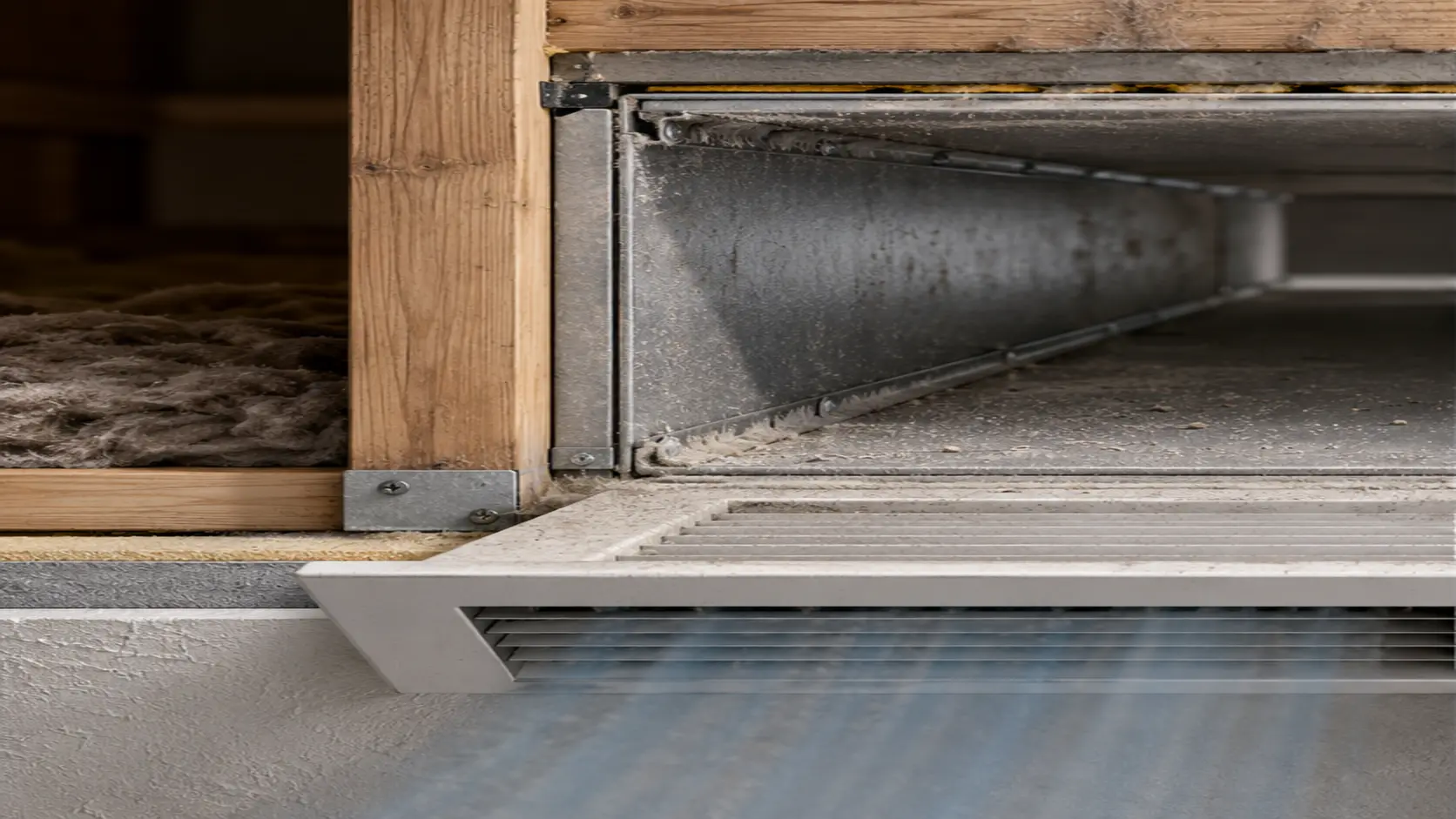
This educational 3D cutaway compares the same duct path before and after professional cleaning. Actual results depend on system condition, access, construction, and the approved scope.
 BeforeAfter
Drag or use your arrow keys to compare the same duct path.
Continental Air Duct Cleaning & HVAC serves qualifying homes and businesses across the Dallas–Fort Worth region. Every request begins with the property, the system, and what the customer is noticing. A web form starts the conversation; it does not confirm availability, price, diagnosis, or an appointment until the team reviews the details.
Recommendations should connect to observable conditions, property history, accessible evidence, and the approved service scope—not fear or a one-size-fits-all sale.
Access, occupied areas, children, pets, work schedules, equipment routes, floor protection, and cleanup are discussed before approved work begins.
Cleaning, mechanical repair, moisture correction, pest work, hazardous materials, and medical questions are different pathways. Continental explains when another qualified professional may be needed.
Call or text (214) 886-0963, or email contihvac214@gmail.com. Share the property type, ZIP code, service interest, system count if known, and what changed.
Continental reviews requests for qualifying Keller addresses. Send the ZIP code, property type, service needed, and current concern; the team confirms service-area fit and scheduling before an appointment is promised.
The written scope should identify the HVAC systems and components included, access assumptions, property-protection steps, exclusions, optional work, and completion documentation. Vent-cover cleaning alone is not the same as cleaning an approved duct-system scope.
There is no responsible one-price answer for every Keller property. System count, component scope, duct layout, register access, condition, occupied-space protection, and approved optional work can change the estimate.
Timing depends on property type, number of systems, approved components, access, setup and protection, work-hour restrictions, and condition. Continental confirms the scope before providing a project-specific time expectation.
Not automatically. Dust and weak airflow can involve filters, returns, leakage, equipment, moisture, housekeeping, outdoor sources, or removable duct material. The observed condition should guide whether cleaning, maintenance, repair, or another step is appropriate.
Remodeling can introduce construction dust, but the decision should follow evidence and system history. Tree pollen, construction, storms, high cooling demand, and winter heating can influence dust, comfort, moisture, odor, and system workload. Inspect accessible areas, note whether the HVAC system operated during work, and ask for a written component-level scope.
No. A dryer vent carries appliance exhaust outdoors; HVAC ducts distribute conditioned air. They have different routes, risks, inspection questions, equipment, and service scopes.
Send the Keller address or ZIP code, property type, service interest, system count if known, affected rooms, what changed, recent construction or water history, accessible photos, and the best contact method.
This map is centered on Keller for local planning. Continental confirms each address, service type, and dispatch fit before scheduling; it does not represent a storefront or universal citywide coverage.
Check My ZIP Code Optimized by Seraphinite Accelerator